
I am the principal of a school with 326 students.
This year, like every other year, those students were grouped by age and then broken into divisions within what might be called the factory model of learning.
I already knew that each class would have:
- a broad range of skills;
- a broad range of maturity;
- a broad range of interests.
Yet, it will be the role of the teacher to differentiate for those students, bring them together as a cohesive group and ensure that their personal interests and aptitudes are tapped into throughout the year. Teachers do this, and they do it well. I’m wondering though, is there a better way? Students move from term to term and grade to grade with students of their own age because…? Yes, there are developmental considerations but have you been in a classroom? There are students wise beyond their years, those with a maturity to match their ages and those still “catching up” to their peers (usually those with late birthdays according to Malcolm Gladwell). There are students who are fascinated by concepts and ideas above their grade level and those curious learners who have trouble grasping learning simply because they may need more time to think, execute and reflect.
Just today this tweet by Dean Shareski captured my thoughts exactly with his Alfie Kohn quote…

Our school, like most schools, strives to connect students with one another and we notice students teaching students. The grade 7’s might be teaching the kindergarten students the skills to use an iPad, but as those kindergarteners ask questions and make mistakes, they are giving back by helping build empathy (and probably perseverance) in our grade 7 students. Our school, like most schools, has students who are enthralled with specific areas of interest and crave to share their knowledge with other learners. They don’t all tend to be in the same grade so this sharing is forced to happen at recess and lunch.
So, how can we design better learning environments? I’m not talking just physical space – I’m talking the whole package.
How can we redesign schools to better meet students where they are as learners across all disciplines?
I don’t have the answer; but I’m curious to find out. I know that some schools around the world report out curricular outcomes on a formalized K-12 continuum. That’s interesting to me. At our school we have a host of clubs that are driven by student interest – what if these were during class time? We are investigating how to connect literacy and numeracy more with the maker movement. We possess the digital experience to now leverage the use of technology in student learning to a greater degree and our teachers have begun moving away from textbooks and more to Khan Academy and Discovery Education in math and inquiry to allow greater personalization. We are connecting our HOPE (Me to We) Committee members with the local high school students and outside agencies such as Startup Skool and Women Leading Change to provide relevant and meaningful learning opportunities. We are exploring opportunities to change our learning environments to be less designated classrooms, and more flexible and purposeful learning spaces. In this space the teacher role could change from “sage on the stage” or “guide on the side” to be more an “activator” of learning. A role of asking more questions that provoke debate, exploration and further drive curiosity and learning. This is interesting to me.
I am excited to delve into my question “how can we redesign schools to better meet students where they are as learners across all disciplines?” as this will be the focus of my Growth Plan this year. The title of this blog is Help, and though a little tongue-in-cheek, there are many aspects of my inquiry question that lend itself to the sharing of ideas, examples and could open up some great discussion. I welcome your thoughts and suggestions as I look to inform my professional learning over the course of this year.
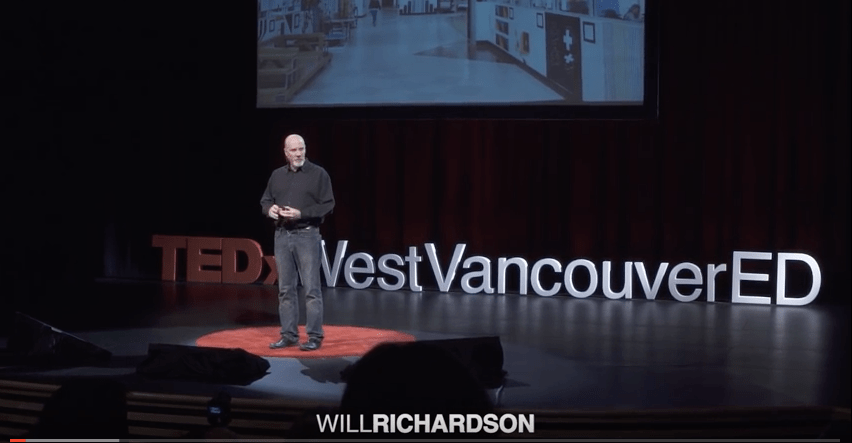
Finally, I end this post with the words of Will Richardson who nailed why this question is important in his recent TEDxWestVancouverED Talk. You can watch his Talk here.







 craigcantlie.com
Leave a comment