
Lately, I have found myself thinking about the pendulum of education in the age of AI.
For years, schools have been moving steadily toward the digital. Laptops replaced notebooks. Typing replaced handwriting. Online discussion boards replaced face-to-face dialogue. Then artificial intelligence arrived.
Ironically, the most advanced technology humans have ever created may now push schools back toward some of the oldest educational practices we have. Not backward in philosophy, but backward toward foundational human skills.
Across schools, there is already a noticeable shift happening. Teachers are increasingly asking students to write in class, complete assessments by hand, and demonstrate learning verbally. Not simply as a reaction to AI, but because AI has fundamentally changed what counts as authentic evidence of understanding.
When a machine can generate a polished essay in seconds, the value of learning shifts.
The question is no longer, “can students produce information?”
The question becomes, “can students think, articulate, defend, synthesize, and communicate ideas authentically?”
That changes classrooms.
It may mean an increased use of Socratic seminars, oral defense, debate, presentations, and live questioning. Students may increasingly need to explain their reasoning aloud, respond dynamically to challenges, and demonstrate understanding in real time.
Importantly, the Socratic method is not simply about speaking. It is deeply social. AI can simulate conversation, but it cannot replicate the vulnerability of being questioned by a another student, the tension of defending an idea publicly, or the emotional intelligence required to listen, respond, disagree respectfully, and adapt thinking in the moment. These are profoundly human experiences, and perhaps they become even more valuable in an AI-driven world. In many ways, AI may push the continued humanization of learning itself.
The same may be true for handwriting. For years, handwriting, particularly cursive, has often been framed as a fading skill. Yet neuroscience continues to show that physically generating symbols through intentional hand movement supports memory, learning, and cognitive development differently than typing alone.
What is important, however, is that this conversation is often framed through a distinctly Western lens. The debate frequently centers on cursive writing, despite much of the world engaging in entirely different traditions of written expression. East Asian writing systems, including Japanese calligraphy practices involve highly sophisticated visual-spatial processing and precision motor control. Arabic script similarly emphasizes flowing movement, form, spatial awareness, and artistic expression through connected lettering and calligraphic tradition.
The cognitive value appears less connected to Western cursive itself and more connected to the intentional physical act of creating written language. Perhaps the deeper lesson is this: the art of writing still matters.
Whether through printing, cursive, Arabic script, sketching, annotation, or calligraphy, physically shaping ideas slows thinking down in productive ways. It makes learning visible.
This is the fascinating tension of the age of AI. As technology accelerates, schools may rediscover the enduring importance of human capacities: conversation, reasoning, storytelling, communication, reflection, and the physical act of creation. The future of education may not become less human because of AI. Instead, AI may clarify which human skills and experiences still matter most.
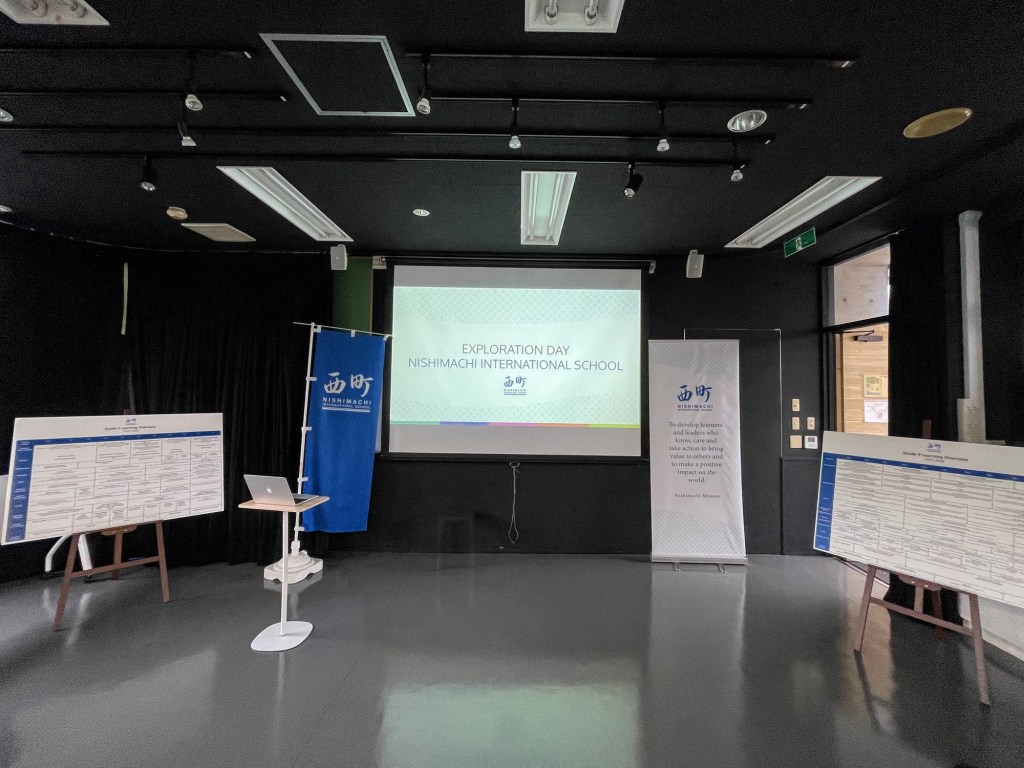
AI supported iterative aspects the refinement process, while the ideas, perspective, and final direction remain my own. The image is my own, taken in Chiba prefecture.






 craigcantlie.com
Leave a reply to Craig Cantlie Cancel reply